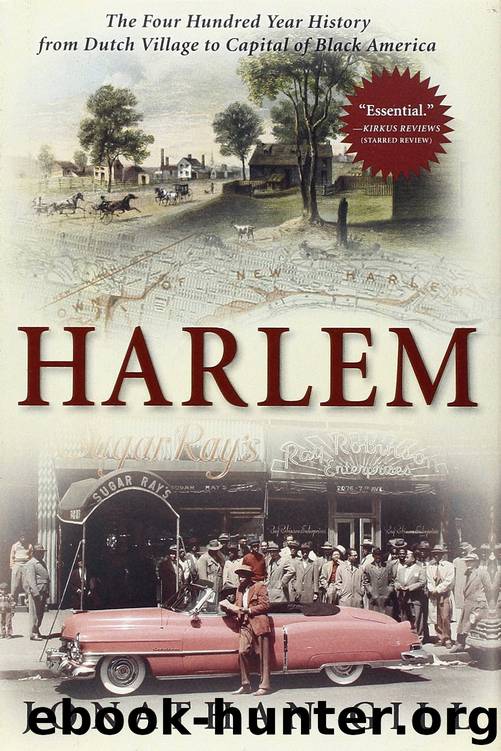
Harlem by Jonathan Gill
Author:Jonathan Gill [Gill, Jonathan]
Language: eng
Format: epub
Tags: Black Studies, History, New York, Non-Fiction, Race
ISBN: 9780802195944
Publisher: Grove/Atlantic, Inc.
Published: 2011-07-17T04:00:00+00:00
The controversy over Nigger Heaven took place in a rarefied atmosphere that was foreign to most Harlemites. Indeed, what was most significant about the book was not the controversial title but the way it intensified long-standing cultural divisions between old New Negroes who demanded that black art uplift the race and new New Negroes who proposed that racial progress would be fatally compromised by taking race too seriously. As it turned out, there was a third way, pioneered by Wallace Thurman, the most terrible of a generation of enfants terribles. Born in Salt Lake City, Utah, Thurman worked as a journalist in Los Angeles before moving to Harlem in 1925 “with nothing but his nerve,” according to legend. By early the next year the twenty-four-year-old Thurman was using his position as managing editor of the Messenger to promote the new generation of Harlem writers. Thurman soon gained a reputation as a brilliant artist with a complicated personal life, at once cynical about race and ashamed of his dark skin color. To make things even more complicated, Thurman was freethinking when it came to the sexuality of others but unable to come to terms with his own. He never got over the shame of having been arrested during a gay assignation in a public bathroom shortly after his arrival in New York, even though homosexuality was hardly a scandal uptown, not when gay nightclubs were so popular and when lesbian blues singers were hit makers. Heavy drinking helped Thurman survive—it certainly made him the life of the nonstop party at the rooming house where the next phase of the Harlem Renaissance was born. “Niggerati Manor,” as 267 West 136th Street was known, was home not only to Thurman but to Aaron Douglas and Richard Bruce Nugent, a twenty-year-old writer and artist from Washington, D.C., who was as far out of the closet as Wallace Thurman was in it. Nugent, who wrote some of the earliest gay fiction in American literature, decorated the walls of the house with images of African jungle dwellers in drag.
This hothouse atmosphere attracted Langston Hughes, who spent the summer of 1926 on West 136th Street basking in the success of his first book. Hughes was now America’s Negro poet laureate, and when he talked about racial art, friends and enemies listened. After the ever unpredictable George Schuyler claimed in an article called “The Negro Art Hokum” that race was irrelevant to artists who happened to be black, Hughes responded with “The Negro Artist and the Racial Mountain,” an essay arguing that both race fetishists and propagandists on the one hand and subjectivists and aesthetes on the other had it wrong. People were more than their skin color but they denied race at their peril. “No great poet has ever been afraid of being himself,” Hughes wrote. “We know we are beautiful. And ugly too.”
The increasing ideological and artistic independence exercised by the residents of Niggerati Manor demanded an outlet, and in that magical summer of 1926 Thurman and his roommates started their own literary magazine.
Download
This site does not store any files on its server. We only index and link to content provided by other sites. Please contact the content providers to delete copyright contents if any and email us, we'll remove relevant links or contents immediately.
| African-American Studies | Asian American Studies |
| Disabled | Ethnic Studies |
| Hispanic American Studies | LGBT |
| Minority Studies | Native American Studies |
Cecilia; Or, Memoirs of an Heiress — Volume 1 by Fanny Burney(32506)
Cecilia; Or, Memoirs of an Heiress — Volume 2 by Fanny Burney(31915)
Cecilia; Or, Memoirs of an Heiress — Volume 3 by Fanny Burney(31900)
The Great Music City by Andrea Baker(31763)
We're Going to Need More Wine by Gabrielle Union(19006)
All the Missing Girls by Megan Miranda(15799)
Pimp by Iceberg Slim(14442)
Bombshells: Glamour Girls of a Lifetime by Sullivan Steve(14025)
For the Love of Europe by Rick Steves(13674)
Talking to Strangers by Malcolm Gladwell(13308)
Norse Mythology by Gaiman Neil(13293)
Fifty Shades Freed by E L James(13193)
Mindhunter: Inside the FBI's Elite Serial Crime Unit by John E. Douglas & Mark Olshaker(9269)
Crazy Rich Asians by Kevin Kwan(9228)
The Lost Art of Listening by Michael P. Nichols(7457)
Enlightenment Now: The Case for Reason, Science, Humanism, and Progress by Steven Pinker(7278)
The Four Agreements by Don Miguel Ruiz(6708)
Bad Blood by John Carreyrou(6587)
Weapons of Math Destruction by Cathy O'Neil(6221)
